Turn the Matrix Into a Plan
Use the decision level above with HurricaneHub tools that already organize local alerts, checklist items, outage planning, and household communication.
Emergency decision support
Use monitor, prepare, act, and leave levels to convert official warnings into household actions before wind, surge, flooding, or road congestion removes good options.
| Level | Trigger | Action |
|---|---|---|
| Monitor | No local warning and no nearby active system | Review forecast twice daily and confirm contact list. |
| Prepare | Tropical system active or watch/flood risk appears | Fuel vehicle, secure medication, document property, inspect supplies. |
| Act | Hurricane, surge, tornado, or flash flood warning | Move inland or shelter as directed; stop nonessential travel. |
| Leave | Evacuation, extreme wind, or life-threatening surge signal | Depart before deadline and tell contacts route and destination. |
Use the decision level above with HurricaneHub tools that already organize local alerts, checklist items, outage planning, and household communication.
Read plain-language guides for the NHC cone, spaghetti models, radar, satellite imagery, storm surge, and hurricane categories before an active warning compresses your decision time.
Time-based planning
The safest hurricane plan is staged before warnings compress your options. Use these windows with official alerts and local instructions.
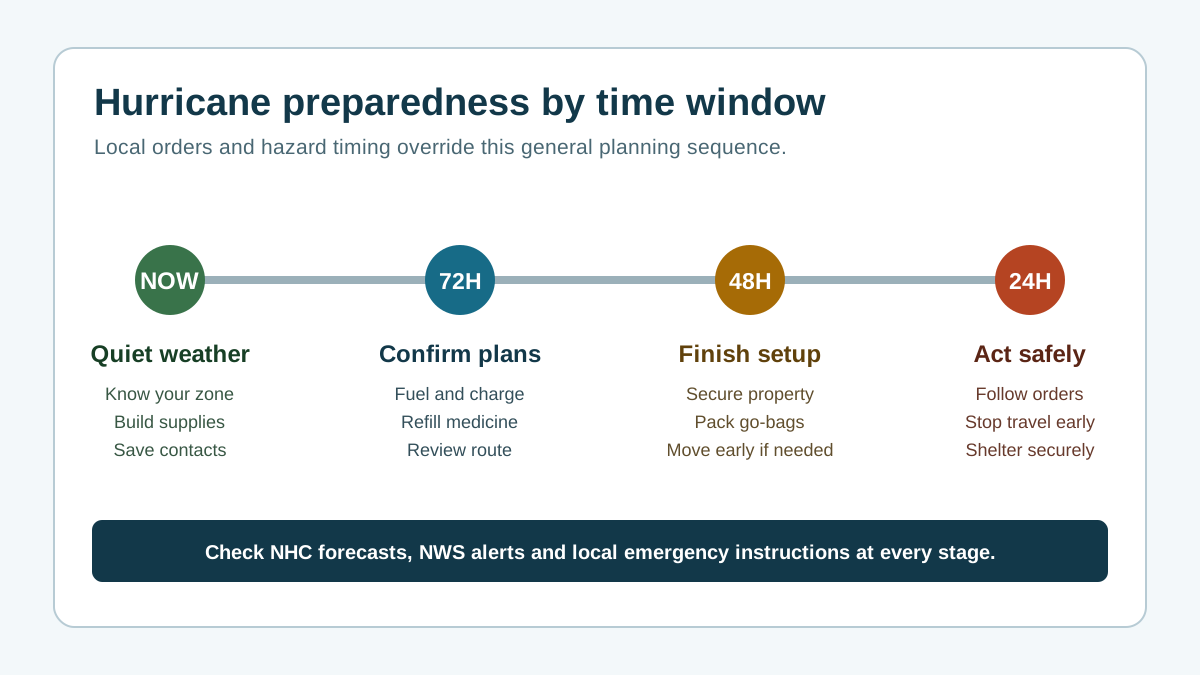
72 hours before possible impacts
Use this window to finish the low-regret work: water, food, batteries, prescriptions, cash, document photos, pet supplies, and a written destination if evacuation becomes likely.
48 hours before possible impacts
Compare the latest NWS alerts, NHC storm context, evacuation-zone instructions, and household constraints. People with medical, mobility, pet, or transportation needs may need to move earlier.
24 hours before possible impacts
Finish protective actions that can be done safely, move vehicles away from flood-prone spots, charge devices, pack medications and documents, and stop outdoor work when conditions deteriorate.
Household scenarios
A hurricane checklist should change when your household has evacuation exposure, medical needs, pets, mobility limits, or outage risk.
Prioritize destination, route, fuel, documents, prescriptions, pet records, chargers, and a contact who knows where you are going.
Confirm you are outside surge and evacuation zones, identify an interior safe room, and prepare for outages, water disruption, heat, and limited communication.
Plan earlier than the general timeline: registrations, equipment power, refrigerated medicine, accessible transportation, and caregiver communication should be ready before watches escalate.
Pack food, carriers, leashes, medications, vaccine records, waste bags, and pet-friendly lodging or shelter options before roads and hotels fill.
Preparedness paths
Preparedness changes as a storm gets closer. These paths connect the decision matrix to the most useful HurricaneHub tool or guide for each stage.
Use quiet weather to finish supplies, documents, insurance photos, family contacts, pet plans, and backup power decisions.
Move from general readiness into local risk: storm surge, flooding, evacuation zones, city context, fuel, routes, and household constraints.
Complete protective actions only while safe, follow official instructions, and use decision tools to organize evacuation or shelter timing.
Shift from preparation to safety, outage management, communication, and official reentry or recovery instructions.
Start with your location: check whether your home is in an evacuation, flood, storm surge, mobile home, or medically vulnerable situation. Then build supplies, documents, contacts, and route plans around that local risk.
No. A home kit helps if you shelter in place, but an evacuation plan needs a smaller go-bag, destination, route, fuel, documents, medicine, chargers, pet supplies, and a contact who knows where you are going.
Move from preparing to acting when official alerts, evacuation-zone instructions, storm surge risk, flash flooding, tornado warnings, or household constraints mean waiting could reduce safe options.
Households with medical equipment, refrigerated medicine, mobility limits, oxygen, dialysis, caregiving, or transportation constraints should prepare earlier than the general timeline and verify local registry or shelter options before a storm is close.
Some supplies overlap, but renters also need building rules, elevator and stair plans, lease and renters insurance records, parking decisions, pet rules, and property-manager communication.