Key Takeaways
Direct Answer: Prepare Your Pets Before You Need To
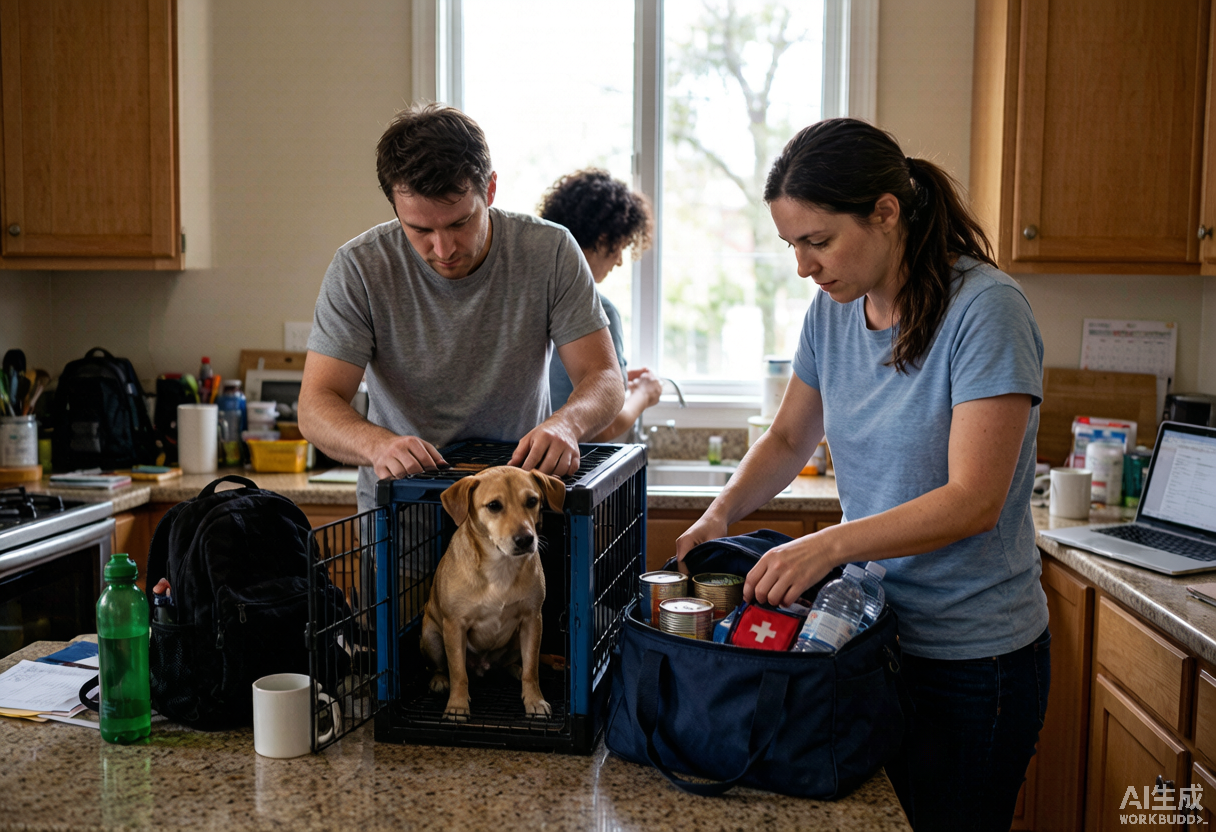
Pets cannot evacuate or shelter themselves, so their safety depends entirely on your plan. As soon as a hurricane threatens, assume you may have to leave with every animal in the household within a few hours. Build a pet go-bag now, confirm your pets are microchipped and tagged, and identify pet-friendly shelters or hotels along your evacuation route before the storm arrives.
Build a Pet Go-Bag
Pack a dedicated emergency kit for each pet so you are not scrambling at the last minute.
- Food and water for at least 5-7 days, plus bowls.
- Medications, a copy of veterinary records, and proof of rabies vaccination.
- Leashes, harnesses, and a sturdy carrier or crate labeled with your phone number.
- A photo of you with each pet to prove ownership if separated.
- Waste bags, litter and a small litter box, and a familiar blanket or toy for comfort.
ID and Microchip Before the Storm
A collar tag with a working phone number is the fastest way to reunite. Microchipping is the backup that cannot fall off. Make sure your microchip registration points to a current phone number and address, because after a storm many families relocate temporarily and shelters scan chips to match animals with owners.
Know Your Pet-Friendly Evacuation Options
Do not assume your regular shelter accepts household pets. Local shelter arrangements vary by event and may use separate co-located areas or designated facilities. Confirm current pet, service-animal, carrier, vaccination, and supply rules with local emergency management, and identify backup pet-friendly lodging or boarding outside the evacuation zone. Take pets with you when evacuating unless officials provide another safe arrangement.
During the Storm: Keep Pets Indoors and Calm
Bring outdoor pets inside well before wind and rain arrive. Keep cats and small animals in carriers so they cannot bolt if a door blows open. Close off unsafe rooms, and never let dogs out unsupervised during the eye, when calm weather tricks animals into wandering. Play soft radio or white noise to mask frightening sounds.
After the Storm: Hazards That Hurt Pets
The hours after landfall are the most dangerous for animals. Floodwater hides sharp debris and carries bacteria, downed lines still carry current, and displaced wildlife may be aggressive. Keep pets leashed and on high ground, and check their paws for cuts before walking them on broken pavement or glass.
Special Cases: Livestock and Backyard Animals
For horses, chickens, and other livestock, early movement is the safest option because trailering during a storm is dangerous. If you cannot relocate them, provide high ground, sturdy shelter, and several days of feed and clean water that will survive flooding. Mark animals with halters or tags where possible so they can be identified if fences fail.
Official Source Check
Before making a life-safety decision, check weather.gov, your local emergency management agency, and current NHC advisories. NOAA/NESDIS and NASA images in this article are public-domain source visuals.
Next Actions After Reading
Use the article for background, then move to the tracker, alert, city, or planning page that matches your current situation.
Turn the article into a supplies, documents, pets, and household readiness checklist.
Translate watch, warning, surge, flood, tornado, and evacuation wording into household actions.
Move from general guidance to local storm surge, flooding, route, outage, and alert context.
Prepare for charging, food safety, refrigerated medicine, generators, pets, and communication.