Key Takeaways
Direct Answer
If you or someone in your home relies on electricity for medical equipment, refrigerated medicine, or daily assistance, your hurricane plan must start with the local functional-needs (special medical needs) registry and a backup power strategy—well before a storm forms. Register with your county emergency management office now, secure a power plan for any device that breathes or pumps, and pack a medical go-bag with at least a two-week supply of prescriptions and a paper copy of every record. Do not wait for an evacuation order to discover your dialysis center is closed or your oxygen is running low. Track the threat with the HurricaneHub tracker tool so you can move on your own schedule.
Hurricane Preparedness Checklist: The Medical Go-Bag
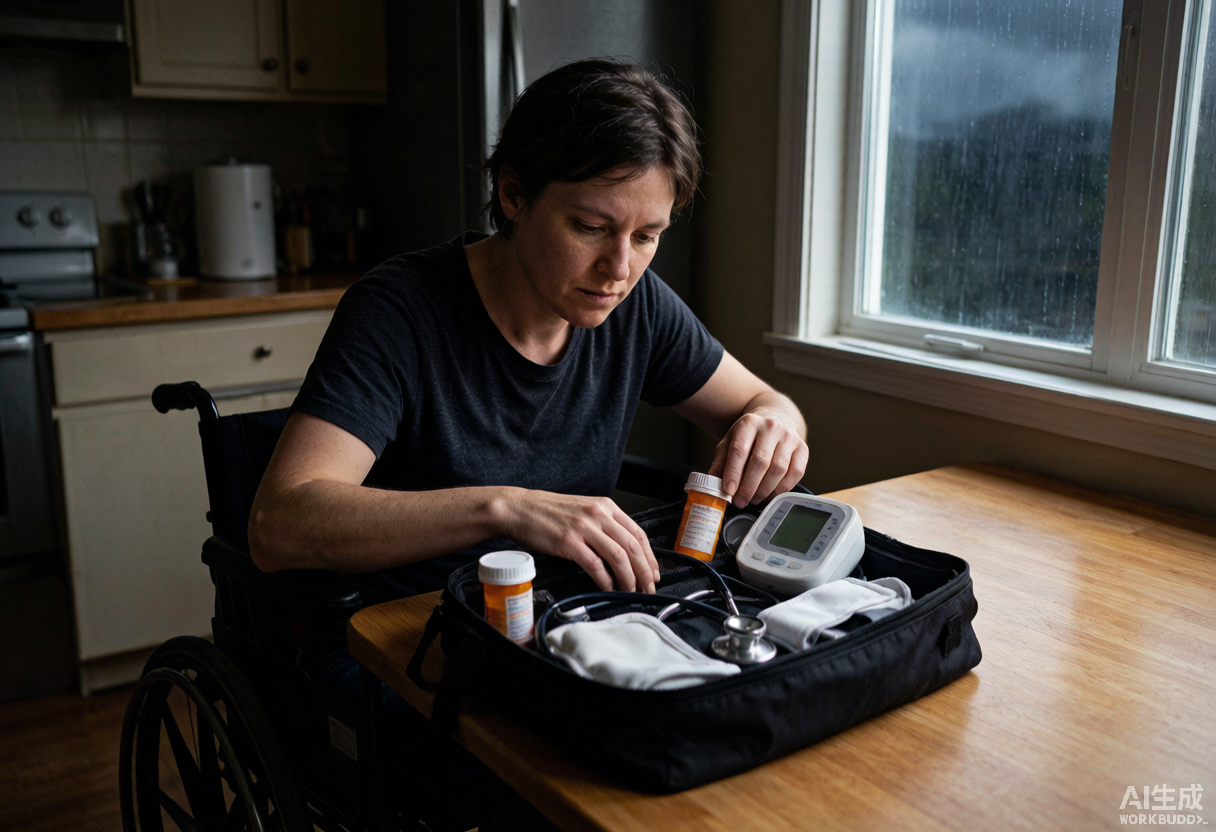
A standard emergency kit is not enough when health depends on equipment and medication. Build a dedicated medical go-bag. Pair this with the general emergency kit checklist for food, water, and light.
- A minimum 14-day supply of all prescriptions, plus copies of every prescription and a current medication list with dosages.
- Refrigerated medicines (insulin, biologics) with a cooled transport method and a thermometer to confirm temperature.
- Backup power for durable medical equipment (DME): charged batteries, a generator, or a transfer switch sized for the device.
- Spare tubing, masks, cannulas, and consumables for ventilators, CPAP, or feeding pumps.
- A written care plan: diagnoses, treating physicians, equipment model numbers, and supplier contacts.
- Service animal supplies: food, vest, vaccinations, and ADA documentation.
- Hearing aids with extra batteries, glasses, and mobility aids (cane, walker, wheelchair) with a patch kit.
Room-by-Room Medical Readiness
For broader interior prep, see the room-by-room guide.
- Bedroom: Keep the medical go-bag, mobility aids, and a charged phone by the bed. Identify the safest path to the interior shelter room with the fewest steps.
- Bathroom: Store a week of essential supplies in a waterproof tote; secure oxygen cylinders upright and away from heat.
- Living area: Designate one windowless room as the shelter space, close to a power source for equipment.
- Utility area: Label the main shutoffs; if you have a generator, practice safe outdoor placement away from windows.
- Entry: Stage a ramp or plan for wheelchair transfer to a vehicle; confirm the vehicle can carry DME.
Protecting Vulnerable Family Members
This post focuses on medical and functional needs, but the broader household still matters. Young children, older adults, and people with cognitive disabilities each need clear, rehearsed roles. Our seniors, children, and disability safety guide covers communication aids, sensory considerations, and how to explain the plan calmly. Coordinate one plan that serves the whole home so no one is overlooked.
Pet and Service Animal Safety
Service animals are not pets under the law and must stay with you, including in most shelters. Pack their food, documentation, and a backup harness. For companion animals, follow the same early-evacuation rule: never leave them behind. The full hurricane pet safety guide lists carriers, records, and pet-friendly lodging.
Insurance: Documents and Coverage
Medical equipment is expensive and often excluded or capped under basic policies. Photograph every device with its serial number and keep receipts in your waterproof file. Confirm whether your plan covers replacement if equipment is damaged by flood—it usually will not without a flood policy. Keep our insurance documentation checklist with your medical records so a claim moves quickly. Understand your deductibles before you need them.
Recovery After the Storm
After landfall, your first task is power and medicine continuity, not cleanup. Rotate equipment to generator or vehicle power if the grid is down, and contact your durable-medical-equipment supplier about replacement if a device was submerged. Refrigerated medicine that warmed above label limits should be replaced—do not guess. Document damage for insurance and request a county "special needs" wellness check if you are isolated. The post-hurricane recovery guide has the safe step order.
The 48-Hour Preparedness Timeline
The full 72/48/24-hour timeline applies to every household.
- 48 hours out: Confirm your registry status, charge all backups, refill prescriptions, and call your dialysis or oxygen supplier for a storm plan.
- 24 hours out: Pack the medical go-bag, test the generator, and confirm accessible transport and lodging.
- 12 hours out: Move to the safe room with equipment; switch non-essential loads off the generator.
- 6 hours out: Stop travel; conserve battery; keep one line open to your support contact.
Track the Storm With HurricaneHub Tools
People with medical needs should evacuate earlier than the general population, so forecast lead time matters more. The HurricaneHub real-time tracker shows the NHC cone and wind field so you can leave before roads clog. Read the cone of uncertainty to understand why the storm does not have to hit you directly to disrupt your power and care. Also watch storm-surge vs. hurricane warnings—surge can cut access routes you will need.
Common Hurricane Preparedness Mistakes
- Assuming the shelter will have your equipment. Most do not; bring backups and power.
- Relying on cell service for the registry. Register in person or by phone now; do not count on a last-minute text.
- Under-packaging medicine. A 3-day supply is the bare minimum; aim for 14 days given pharmacy closures.
- Forgetting paper records. If the cloud is down, a printed medication list and care plan is what EMTs will use.
- Waiting for an order to leave. Medical-needs households should move on their own schedule, ahead of the order.
Official Resources and Where to Get Help
Before any life-safety decision, check weather.gov, your local emergency management agency, and current NHC advisories.
- National Hurricane Center: https://www.nhc.noaa.gov — official track and warnings.
- National Weather Service: https://www.weather.gov — local alerts and forecasts.
- FEMA/disaster disability: https://www.fema.gov — assistance and accessibility guidance.
- CDC emergency preparedness: https://www.cdc.gov — medication and equipment cooling guidance.
- Your county emergency management office: the functional-needs registry and accessible shelter locations.
Final Checklist and Take Action
Register today, not during the next storm. Three actions this week: (1) add your household to the county functional-needs registry, (2) build the medical go-bag with a 14-day medication buffer, and (3) test a power plan for any life-dependent device. When a system forms, open the HurricaneHub tracker tool daily and plan to move early. Your health cannot wait for the forecast to be certain.
Building a Support Network and Communication Plan
A plan fails if no one knows it. Designate two contacts—one local, one out of state—who will check on you and relay status if local lines fail. Share your care plan and equipment needs with a neighbor who can assist in the first hours. If you live alone, ask your area agency on aging or disability organization to add you to a call-down list. Our family communication plan guide has the template to fill in now, while the weather is calm.
Official Source Check
Before making a life-safety decision, check weather.gov, your local emergency management agency, and current NHC advisories. NOAA/NESDIS and NASA images in this article are public-domain source visuals.
Next Actions After Reading
Use the article for background, then move to the tracker, alert, city, or planning page that matches your current situation.
Turn the article into a supplies, documents, pets, and household readiness checklist.
Translate watch, warning, surge, flood, tornado, and evacuation wording into household actions.
Check current NHC storm context, live map shortcuts, radar, and active alert pathways.
Move from general guidance to local storm surge, flooding, route, outage, and alert context.