Key Takeaways
Direct Answer: Start With Official Re-Entry and Documentation
After a hurricane, treat recovery as a sequence: wait for local officials to say it is safe to return, check for immediate hazards from outside first, document damage before cleanup when safe, contact your insurer, and use official disaster-assistance channels if your area qualifies. This guide is an orientation hub, not a substitute for local emergency management, utility crews, insurance policy terms, medical advice, or contractor guidance.
Your First 24 Hours: Stabilize People, Access, and Evidence
The first day is about preventing a second emergency. Confirm that everyone is accounted for, follow re-entry instructions, keep away from floodwater and utilities, and preserve evidence before cleanup. Do not make a risky repair simply to protect property or speed up a claim.
- Confirm the official all-clear and that your exact route is open.
- Check household members, pets, medications, and urgent medical needs.
- Photograph exterior, rooms, water lines, utilities, and damaged belongings when safe.
- Report gas leaks, downed lines, fires, and life-safety hazards from a safe location.
- Call your insurer and save the claim number, adjuster contact, and every receipt.
Hours 24–72: Protect the Structure and Start the Recovery File
Once officials and qualified professionals confirm that work can begin, separate urgent stabilization from permanent repairs. Keep a dated recovery log with photos, receipts, contractor details, utility calls, hotel costs, and assistance applications. This record helps your household coordinate and gives insurers or assistance programs a clearer timeline.
- Use licensed help for electrical, gas, structural, roof, and major mold problems.
- Follow local water, food, debris, and flood-cleanup instructions.
- Ventilate and dry affected areas only after electrical and structural hazards are cleared.
- Ask your insurer before discarding damaged items unless safety requires immediate removal.
- Apply through DisasterAssistance.gov only if an eligible disaster declaration covers your area.
Return-Home Decision Checklist
There is no universal number of hours after landfall when a home is safe. Use this short checklist with local emergency management: the route is open, the evacuation order is lifted, utilities are safe or disconnected, floodwater has receded, the structure shows no obvious instability, and your household has the protective equipment and supplies needed for a brief inspection. If any answer is no or uncertain, wait and ask the responsible official or a qualified professional.
- Local officials have authorized re-entry for your neighborhood.
- Roads, bridges, and access points are open and not covered by moving water.
- There is no gas odor, sparking, downed line, active fire, or visible structural collapse.
- You know how to report utility hazards and where to get local instructions.
- You can leave immediately if conditions worsen.
Wait for the Official All-Clear Before Returning
Do not rush back while evacuation orders are still in effect or roads are blocked. Local officials lift orders only after they have checked routes, utilities, and major hazards. Use county emergency management, weather.gov, and local public-safety updates as the source of truth for re-entry.
- Confirm that your neighborhood or route is open before traveling.
- Avoid standing or moving floodwater and follow road-closure instructions.
- Stay away from downed power lines, damaged gas meters, and unstable structures.
- Use text updates when possible so emergency networks stay available.
Return Home Safely: Check Hazards Before Entering
A house can look intact from the street but still have hidden damage. Look for exterior hazards first and bring in qualified help for utilities, structural questions, electrical systems, gas, major roof damage, or suspected contamination. If you are unsure whether it is safe, wait for professional or local official guidance.
- If you smell gas or suspect a leak, leave the area and report it from outside.
- Use licensed professionals for utility, electrical, roof, and structural concerns.
- Wear protective clothing if local officials say cleanup can begin.
- Watch for debris, displaced wildlife, unstable flooring, and hidden sharp objects.
Document Everything Before You Clean Up
Insurance and assistance programs usually need evidence. When it is safe, photograph and video damage before cleanup, keep receipts, and write down dates, locations, and conversations. Your policy terms and insurer instructions control what documentation is required, so contact them early and keep copies of everything you send.
- Photograph every room and damaged item from multiple angles.
- Capture the roof and exterior if it is safe to do so.
- Write a room-by-room inventory with estimated values.
- Keep damaged items when practical, or photograph them before disposal if health or safety requires removal.
File Your Insurance Claim Early
Report your loss as soon as you can do so safely, then ask the insurer what documents, photos, temporary repairs, and receipts it wants. Hurricane claims can involve wind, rain intrusion, flood, and living-expense questions, sometimes under different policies. Review your declarations page and policy terms before assuming what is covered.
- Report the claim promptly after it is safe to do so.
- Ask whether Additional Living Expenses or loss-of-use coverage applies.
- Ask whether flood damage requires a separate flood policy or NFIP claim.
- Save every receipt for temporary repairs and lodging.
Check FEMA and Disaster Assistance Eligibility
Federal disaster assistance is separate from insurance and is generally tied to a declared disaster. If your area is included, use DisasterAssistance.gov or official FEMA channels to check eligibility, deadlines, inspection steps, and required documents. FEMA assistance is not a replacement for insurance and may not cover every loss.
- Use DisasterAssistance.gov or FEMA's official phone channels after a declared disaster.
- Keep your registration number and inspection appointment.
- Track deadlines because assistance windows can close.
- Keep insurance communications and FEMA documents in the same recovery folder.
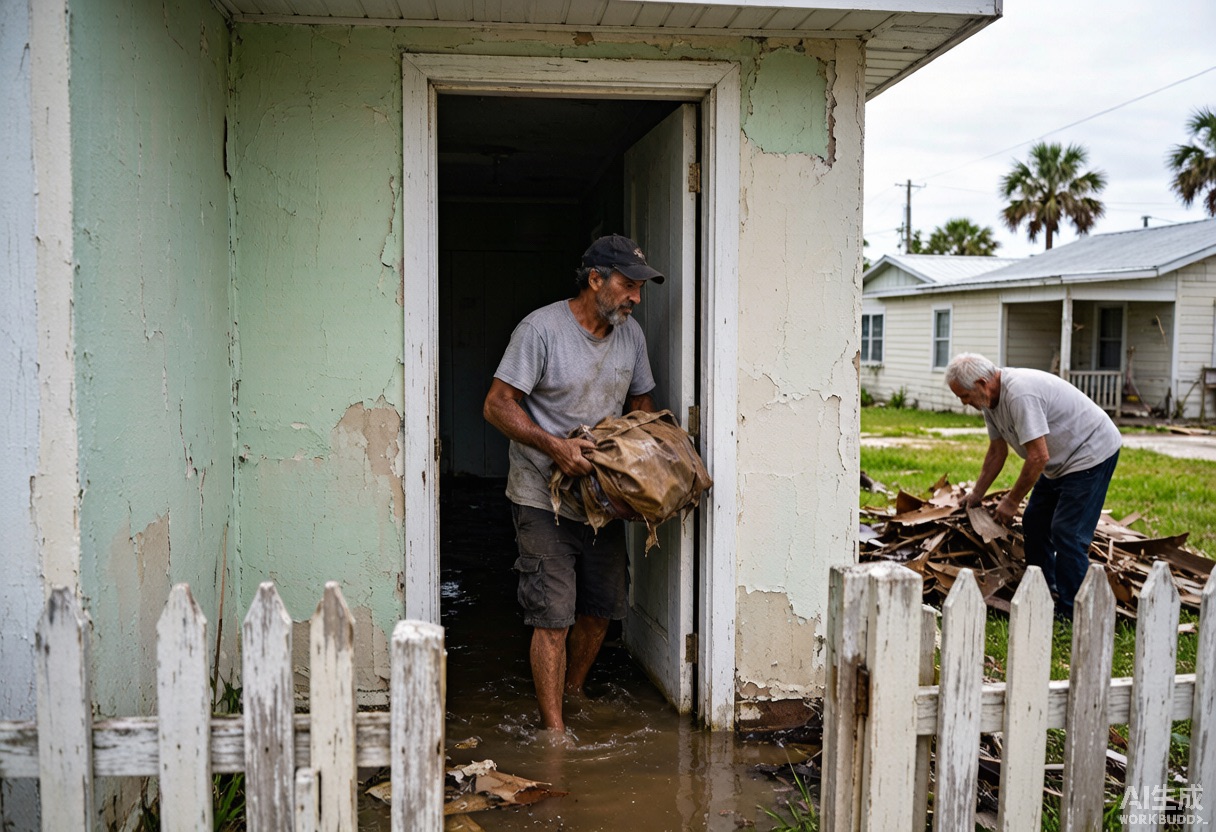
Cleanup: Floodwater, Mold, and Debris
Flood cleanup can involve contaminated water, mold, electrical hazards, sharp debris, unstable materials, and health risks. Use EPA, CDC, local health department, and emergency-management guidance before beginning. People with asthma, immune conditions, pregnancy, infants, older adults, or medical needs should be especially cautious and may need professional help.
- Confirm the structure and utilities are safe before cleanup.
- Document damaged materials before removal when possible.
- Use protective gear and ventilation according to official cleanup guidance.
- Consider professional remediation for large, recurring, or HVAC-related mold.
Water, Power, and Food Safety
A hurricane can disrupt water, refrigeration, charging, medical equipment, and communications. Follow boil-water notices and local health guidance. If using a portable generator, follow the manual and official generator-safety guidance; never use it indoors, in a garage, or in any enclosed or partly enclosed area.
- Obey boil-water advisories until officials lift them.
- Follow official food-safety guidance for outage or flood-exposed food.
- Use generators only outdoors and away from openings.
- Keep working carbon monoxide alarms in the home.
Avoid Post-Storm Scams and Bad Contractors
After major disasters, contractor fraud and price-gouging complaints often rise. Slow down, verify licenses, check references, get written estimates, and avoid pressure tactics. Your state insurance department, attorney general, or local consumer-protection office may publish post-disaster warnings.
- Beware door-to-door contractors demanding upfront payment.
- Verify licenses and insurance before signing anything.
- Collect at least three written estimates.
- Report price gouging to your state attorney general.
Take Care of Yourself and Your Household
Recovery can take weeks or months. Keep a routine, document tasks, ask for help, and use official or nonprofit support channels when available. If distress, grief, anxiety, or sleeplessness becomes overwhelming, consider contacting SAMHSA's Disaster Distress Helpline or a local health professional.
Use This Recovery Hub With Related Guides
For a fuller recovery path, pair this page with the hurricane insurance claim documentation guide, Additional Living Expenses coverage guide, generator safety guide, power outage planner, and live hurricane tracker. Those pages break out high-risk topics so this article can remain a navigation hub rather than an overconfident replacement for official instructions.
- Insurance documents and claim photos: /blog/hurricane-insurance-claim-guide-documentation/
- Additional living expenses: /blog/hurricane-additional-living-expenses-ale-coverage/
- Generator safety: /blog/hurricane-generator-safety-carbon-monoxide/
- Power outage planning: /tools/power-outage-planner/
- Live tracker and alerts: /hurricane-tracker/live/
Official Resources to Check First
Use official sources before making recovery decisions. Local emergency management controls re-entry and evacuation updates, weather.gov provides local warnings, NHC provides tropical cyclone advisories, DisasterAssistance.gov handles federal disaster-assistance applications, and your insurer or policy controls coverage decisions.
- National Weather Service: https://www.weather.gov/
- National Hurricane Center: https://www.nhc.noaa.gov/
- Disaster assistance: https://www.disasterassistance.gov/
- FEMA: https://www.fema.gov/
- Ready.gov hurricane guidance: https://www.ready.gov/hurricanes
- CDC floodwater and cleanup guidance: https://www.cdc.gov/floods/
Official Source Check
Before making a life-safety decision, check weather.gov, your local emergency management agency, and current NHC advisories. NOAA/NESDIS and NASA images in this article are public-domain source visuals.
Next Actions After Reading
Use the article for background, then move to the tracker, alert, city, or planning page that matches your current situation.
Turn the article into a supplies, documents, pets, and household readiness checklist.
Translate watch, warning, surge, flood, tornado, and evacuation wording into household actions.
Check current NHC storm context, live map shortcuts, radar, and active alert pathways.
Move from general guidance to local storm surge, flooding, route, outage, and alert context.