Key Takeaways
Direct Answer
Most hurricane damage along the coast is caused by water, yet standard homeowners insurance excludes flood entirely. To be covered you need a separate policy—usually through the National Flood Insurance Program (NFIP) or a private flood insurer—and NFIP has a 30-day waiting period, so you must buy it before hurricane season, not during a watch. A flood policy pays to rebuild or repair the structure and replace contents up to the limits you choose; wind and surge are billed separately from wind damage. Document everything with photos before and after, and file the claim as soon as it is safe. Track incoming threats with the HurricaneHub tracker tool so you are not deciding coverage mid-storm.
Hurricane Preparedness Checklist: Insurance Documents
Flood claims move faster when your paperwork is ready before the water rises. Pair this with the general emergency kit checklist for evacuation supplies.
- Your flood policy number, insurer, and claims phone number in a waterproof pouch and cloud storage.
- A copy of the declarations page showing building and contents limits.
- A home inventory with photos or video of every room, appliance, and stored item.
- Receipts for major purchases and any flood-mitigation improvements (vents, barriers).
- Mortgage and deed documents, and proof of prior flood claims if any.
- A printed insurance documentation checklist to follow on claim day.
Room-by-Room Documentation Plan
Photograph the house room by room while it is dry so a adjuster can verify pre-loss condition. A fuller interior walkthrough is in the room-by-room preparedness guide.
- Ground floor and basement: Capture walls, flooring, appliances, and stored boxes at ankle, knee, and waist heights you may later claim.
- Kitchen: Photo the fridge, washer, furnace, and water heater—these are common flood losses.
- Living areas: Record electronics, furniture, and stored items with serial numbers where possible.
- Attic and upper floors: Document anything you will move up to stay dry.
- Exterior: Photo the grade, foundation, and any installed flood vents or barriers.
Protecting Vulnerable Family Members
Flood recovery is harder on seniors, children, and people with disabilities, who are more sensitive to contaminated water and displacement. Keep their medical and mobility needs in the same waterproof file as your policy, and plan accessible temporary housing in advance. Our seniors, children, and disability guide covers registries and transport; the medical-needs preparedness guide adds equipment power planning.
Pet Safety and Flood Claims
Pets and livestock are not covered by flood policies, and wet, stressed animals complicate recovery. Evacuate with pets early and keep their records with your insurance file. The hurricane pet safety guide explains go-bags and pet-friendly lodging so you are not choosing between your animals and your claim.
Insurance: Documents and Coverage
NFIP covers two things you can buy separately: building property (up to $250,000 for residences) and personal contents (up to $100,000), each with its own limit and deductible. It pays actual cash value for contents and, for primary residences, replacement cost on the structure if you carry adequate limits. Private flood policies may offer higher limits and lower wait times but vary widely—read the exclusions. Critically, flood insurance is separate from your hurricane wind deductible; a single storm can generate two claims. Our claim documentation guide explains the wind-versus-water divide (the line adjusters use).
Recovery After the Storm
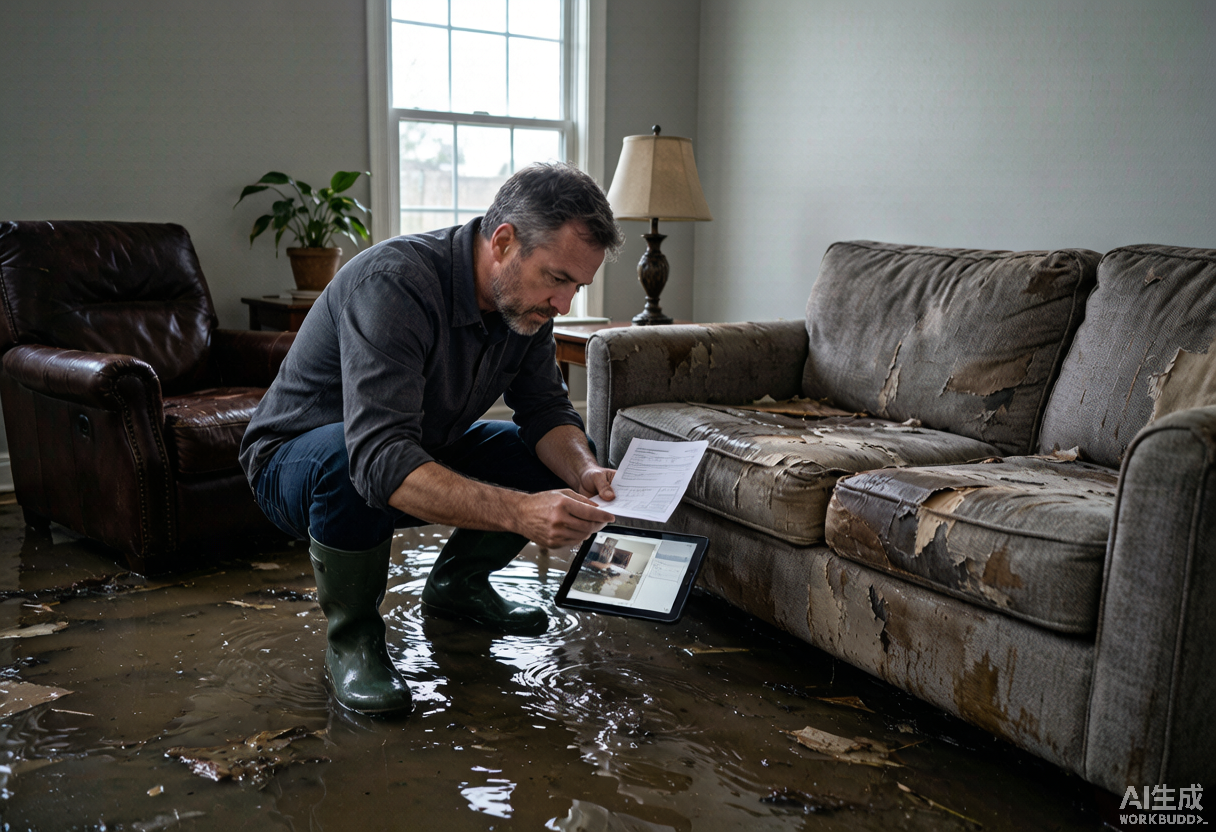
Once safe, document before you clean. Photograph standing water levels on walls, damaged items in place, and removed contents stacked outside. Do not discard anything until the adjuster approves; if you must dispose of spoiled items for health, photograph and list them. Make only reasonable, documented mitigation repairs (pump-out, board-up) and keep every receipt—NFIP reimburses up to $1,000 of reasonable expenses without further proof. The post-hurricane recovery guide sets the safe order of operations.
The 48-Hour Preparedness Timeline
The 72/48/24-hour timeline covers the full household sequence.
- 48 hours out: Confirm policy is active (not in a wait period), move contents upstairs, and stage sandbags or barriers.
- 24 hours out: Back up photos and the inventory to cloud; charge your phone for claim-day documentation.
- Immediately after: Photograph flood lines and damage; contact the insurer to open the claim; request an adjuster.
- Within 60 days: Submit your Proof of Loss for NFIP (the strict statutory deadline—miss it and the claim can be denied).
Track the Storm With HurricaneHub Tools
Flood risk is about surge and rainfall, not just the cone center. The HurricaneHub real-time tracker shows the NHC cone and wind radii so you can judge arrival; pair it with storm-surge vs. hurricane warnings to see whether water—not wind—is your real threat. Reading the cone of uncertainty helps you prepare for the wide possible track, because flood zones often sit far from where the eye makes landfall.
Common Hurricane Preparedness Mistakes
- Assuming homeowners insurance covers flood. It does not. You need a separate policy.
- Buying flood insurance during a watch. NFIP's 30-day wait means it will not be active in time.
- Skipping contents coverage. Structure-only policies leave your furniture and appliances unprotected.
- Throwing away damaged items. Adjusters need to see them; document first.
- Missing the Proof of Loss deadline. NFIP requires it within 60 days; lateness can void payment.
Official Resources and Where to Get Help
Before any life-safety or financial decision, check weather.gov, your local emergency management agency, and current NHC advisories.
- National Flood Insurance Program: https://www.floodsmart.gov — policies, limits, and agents.
- FEMA flood maps: https://www.fema.gov/flood-maps — your zone and risk.
- National Hurricane Center: https://www.nhc.noaa.gov — official forecasts and surge guidance.
- National Weather Service: https://www.weather.gov — local alerts.
- Your state insurance department: claim-handling rules and private-policy complaints.
Final Checklist and Take Action
Buy flood insurance before June 1, not when a storm is named. This week: confirm your zone at floodsmart.gov, choose building and contents limits that match your rebuild cost, and photograph your home inventory. This storm: move valuables up, document the waterline, and file within days. Open the HurricaneHub tracker tool to time your actions against the real forecast. Flood is the most expensive hurricane damage and the most commonly uninsured—close that gap now.
Avoiding Contractor Fraud During Recovery
After a flood, unscrupulous "storm chasers" demand large deposits, promise fast NFIP paperwork, or inflate estimates. Protect your claim: use licensed, local contractors with verifiable references; never pay the full amount up front; get three written estimates; and report pressure tactics to your state insurance department. Insist that any repair aligns with the adjuster's scope so your reimbursement is not reduced. Fraud also hurts your wind vs. water claim—keep every document clean and itemized.
Official Source Check
Before making a life-safety decision, check weather.gov, your local emergency management agency, and current NHC advisories. NOAA/NESDIS and NASA images in this article are public-domain source visuals.
Next Actions After Reading
Use the article for background, then move to the tracker, alert, city, or planning page that matches your current situation.
Turn the article into a supplies, documents, pets, and household readiness checklist.
Translate watch, warning, surge, flood, tornado, and evacuation wording into household actions.
Check current NHC storm context, live map shortcuts, radar, and active alert pathways.
Move from general guidance to local storm surge, flooding, route, outage, and alert context.