Key Takeaways
Direct Answer
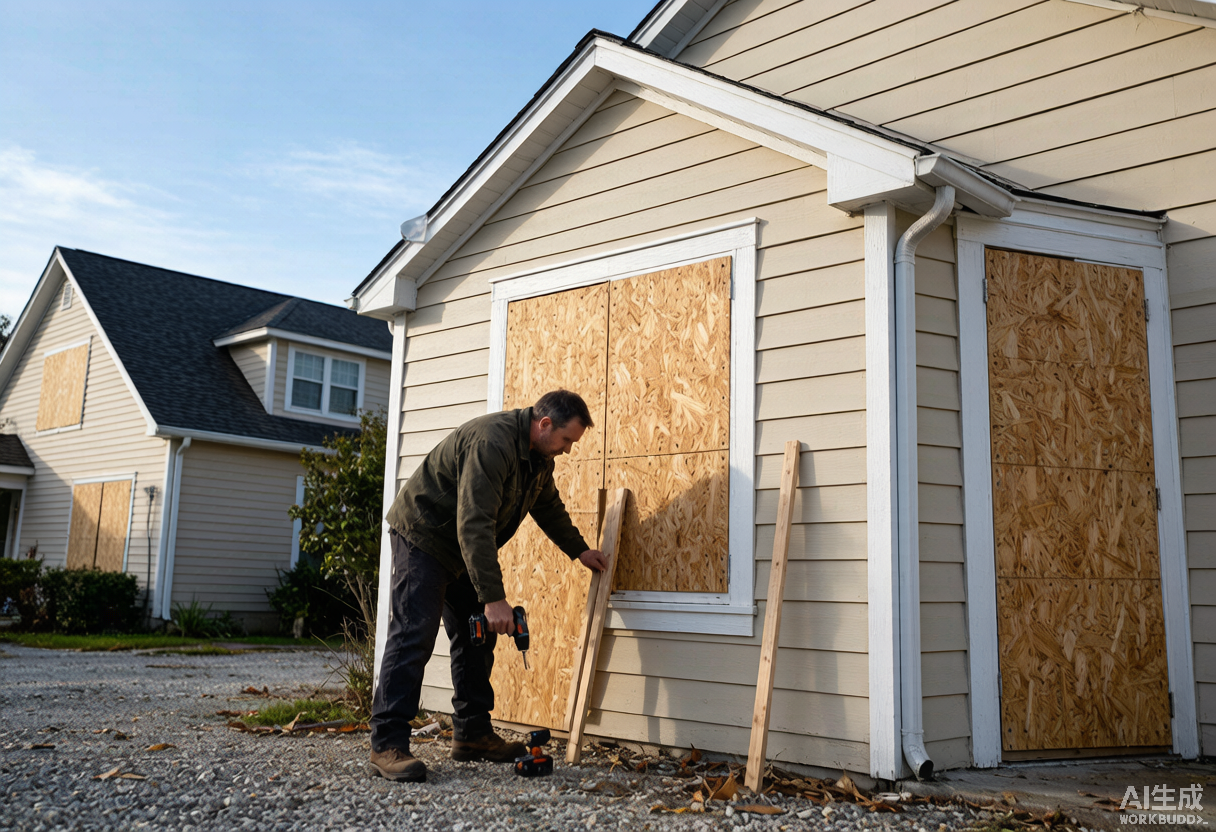
Start hardening your home the moment a hurricane enters the five-day forecast, not the night before. The single highest-value actions are protecting openings (windows and doors), bracing the garage door, and clearing the yard of projectile debris. Spend the first 48 hours on permanent and semi-permanent fixes—storm shutters, plywood panels, roof trim—and the final 24 hours on the interior and last-minute securing. A hardened envelope is what keeps wind and rain out; once water gets inside, damage multiplies fast. Use the HurricaneHub tracker tool to watch the cone and time your work against the forecast.
Hurricane Preparedness Checklist: The Home Hardening Kit
A "go-bag" protects your family; a separate home hardening kit protects the structure. Assemble it before hurricane season, not during the rush. Keep this kit in one marked bin so you are not searching in the rain. Pair it with a family emergency kit checklist for supplies you will take if you evacuate.
- Pre-cut plywood panels labeled for each window and door, with drilled pilot holes.
- Storm shutters (permanent or accordion) and the hardware to mount them.
- Garage door braces or a reinforced retrofit kit rated for your wind zone.
- Roofing sealant, spare shingles, and a tarp sized for the largest vulnerable roof section.
- Sandbags or flood barriers for ground-floor doors and low-lying entries.
- Ratchet straps, bungee cords, and heavy-duty anchors for outdoor items.
- A lithium-ion or manual drill, bits, a ladder, and work gloves.
Room-by-Room Home Inspection
Hardening is not only exterior. Walk the house and address each space: A full interior version of this walkthrough is in our room-by-room preparedness guide.
- Attic and roof: Check for loose or missing shingles, deteriorated flashing, and water stains that signal an existing leak. Trim overhanging branches that could puncture the roof.
- Windows: Confirm each opens, closes, and locks. Note which need panels or shutters; measure and pre-fit them now.
- Exterior doors: Tighten hinges and strike plates; add a deadbolt or barrel bolt at the top and bottom for double doors.
- Garage: This is the most common structural failure point. Install a vertical bracing kit or retrofit kit so the door cannot flex inward under pressure.
- Utility room: Know where the main water, gas, and electrical shutoffs are, and keep a wrench nearby.
- Yard and patio: Anything loose becomes a missile. Secure or store furniture, grills, planters, and trash cans.
- Interior: Move valuables, electronics, and documents to an upper floor or a sealed plastic container off the ground.
Protecting Vulnerable Family Members
If anyone in the home is elderly, a young child, or has a disability, hardening decisions should account for their mobility and medical needs. Identify a safe interior room with no windows for shelter, keep medications and mobility aids in one grab-and-go spot, and confirm the evacuation route is wheelchair accessible. Do not rely on memory—write the plan down. Our dedicated guide for seniors, children, and people with disabilities covers registries and support networks in detail.
Pet Safety During Hurricane Prep
Pets need the same early action as people. Bring outdoor animals inside before wind arrives, confirm collars and microchips, and pack a pet go-bag with food, water, meds, and carriers. If you evacuate, take pets with you—most public shelters that accept people will not take animals, so identify pet-friendly hotels in advance. See the full hurricane pet safety guide for a complete checklist.
Insurance: Documents and Coverage
Hardening reduces damage, but it does not eliminate risk, so your paperwork must be ready before landfall. Photograph or video every room, the roof, and outbuildings now, while conditions are fair. Store the policy number, agent contact, and a copy of the declarations page in a waterproof pouch and in cloud storage. Understand your hurricane deductible—it is usually a percentage of dwelling value, not a flat amount, and it applies separately from the flood deductible. Keep our insurance documentation checklist handy so nothing is missing when you file.
Recovery After the Storm
After the storm passes, do not rush back in. Wait for official "all clear," then inspect from the outside first: downed lines, gas smell, and structural leaning mean stay out. Document every bit of damage with photos before any temporary repair, and keep receipts for tarps or board-up work—insurers reimburse reasonable mitigation. A safe, ordered recovery plan is in what to do after a hurricane.
The 48-Hour Preparedness Timeline
Our broader 72/48/24-hour timeline expands each window.
- 48 hours out: Install shutters or plywood on the most exposed openings; brace the garage door; clear yard debris; top off fuel and charge power banks.
- 24 hours out: Finish remaining openings; move valuables upstairs; stage the sandbags; confirm evacuation lodging and route via your evacuation zone lookup.
- 12 hours out: Shut off propane; set the fridge to coldest; fill bathtubs and containers with water; bring pets inside.
- 6 hours out: Close and lock all interior doors; move to the safe room; stop all exterior work once tropical-storm-force winds begin.
Track the Storm With HurricaneHub Tools
Timing your hardening work depends on an accurate forecast. The HurricaneHub real-time tracker shows the official NHC cone, current position, and wind radii so you can judge when the 48-hour window opens for your area. Learn to read uncertainty in the cone of uncertainty explainer—the storm can shift, and your prep should finish before the outer edge, not the center, reaches you. Pair tracking with storm-surge vs. hurricane warnings so you know whether water, not just wind, drives your decision.
Common Hurricane Preparedness Mistakes
- Taping windows. Tape does not stop glass from breaking and creates sharper, more dangerous shards. Use panels or shutters.
- Ignoring the garage door. A failed garage door can pressurize the whole house and lift the roof. Always brace it.
- Waiting for a warning. By the time a warning is issued, stores are empty and the clock is short.
- Forgetting the yard. Lawn furniture causes as much damage as flying branches.
- Assuming insurance covers flood. Standard policies do not. See the flood section below and our flood insurance guide.
Official Resources and Where to Get Help
Before any life-safety decision, check weather.gov, your local emergency management agency, and current NHC advisories.
- National Hurricane Center: https://www.nhc.noaa.gov — advisories, cone, and warnings.
- National Weather Service: https://www.weather.gov — local forecasts and alerts.
- Ready.gov hurricanes: https://www.ready.gov/hurricanes — family planning.
- FEMA: https://www.fema.gov — assistance and the flood program.
- Your county emergency management office: shelter locations, evacuation orders, and special-needs registries.
Final Checklist and Take Action
You do not need to do everything at once, but you do need to start early. This week: build the hardening kit, pre-fit plywood, and brace the garage. This season: photograph the house and organize insurance papers. This storm: follow the 48-hour timeline and track the cone. The HurricaneHub tracker tool is free and updates with official data—open it now and set a reminder to check it daily once a system forms. Preparedness is a habit, not a panic.
When to Evacuate vs. Shelter in Place
Evacuate if you are in a designated storm-surge or evacuation zone, if local officials order it, or if your home cannot withstand the expected winds. Shelter in place only when you are outside surge risk, in a sturdy structure, with openings protected and a safe interior room identified. Never "ride it out" in a mobile or manufactured home, a low-lying area, or a house with known structural damage. When the order comes, leave early—roads flood and clog fast.
Official Source Check
Before making a life-safety decision, check weather.gov, your local emergency management agency, and current NHC advisories. NOAA/NESDIS and NASA images in this article are public-domain source visuals.
Next Actions After Reading
Use the article for background, then move to the tracker, alert, city, or planning page that matches your current situation.
Turn the article into a supplies, documents, pets, and household readiness checklist.
Translate watch, warning, surge, flood, tornado, and evacuation wording into household actions.
Check current NHC storm context, live map shortcuts, radar, and active alert pathways.
Move from general guidance to local storm surge, flooding, route, outage, and alert context.