Direct Answer
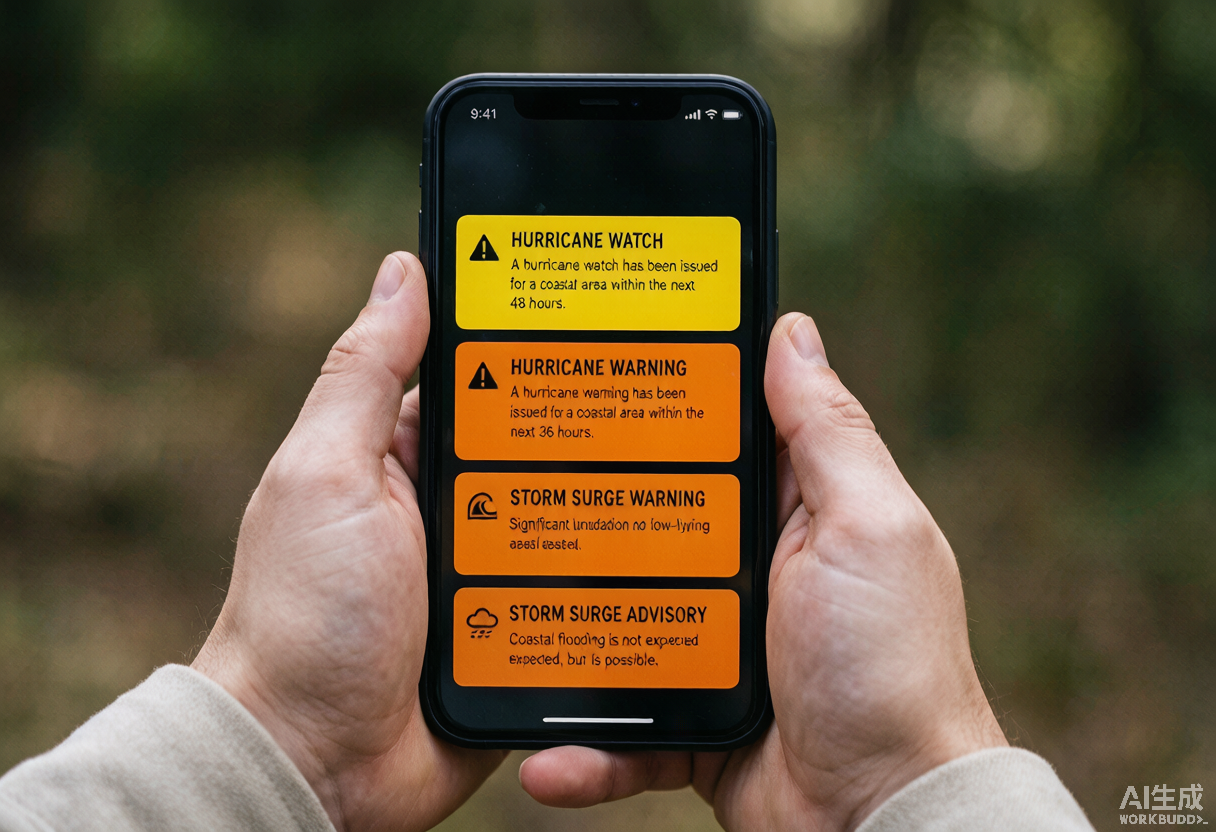
Several alerts can apply to one location at once because wind, coastal water, rainfall flooding and tornadoes are different hazards. Read each product's issuing agency, affected area, issue time, validity and instructions. A newer message about one hazard does not cancel another. This guide focuses on keeping those messages separate; use the linked watch/warning and surge guides for detailed definitions.
Give Each Hazard Its Own Record
Do not place all products on one mild-to-severe ladder. A hurricane watch can coexist with a flash flood warning or a tornado warning that requires action now. Keep the issuer, area, time and action together in separate rows.
- Hurricane or tropical-storm wind product: read the named wind area and expected arrival timing; wind-warning lead time is not a landfall countdown.
- Storm surge product: read the coastal inundation area and check the responsible local authority's evacuation orders.
- Flood or flash flood product: read the specific area and instructions. NWS says people in a flood-prone area under a flash flood warning should move immediately to high ground; never drive through floodwater.
- Tornado warning: NWS directs immediate shelter in an interior room on the lowest floor of a sturdy building, away from windows. It is not a cue to finish shopping or start a long drive.
- Local evacuation order: record the issuing authority, zones or groups covered, and required action separately from the NWS weather products.
What Changes the Action Level
Medical equipment, mobility, transport and animal-care needs change the arrangements a household must confirm; they do not downgrade an official warning. Plan those arrangements early. When immediate shelter and travel concerns overlap, read the current protective instructions and contact local emergency officials for the actual situation rather than treating a generic checklist as a rule for resolving every conflict.
Read the Full Alert in This Order
First match the listed area to your location. Then check issue time, expiry, hazard, expected timing, and the protective instructions. A continuing hurricane warning, a new tornado warning, and a cancelled flood advisory may appear together; the newest headline does not cancel a different hazard. Follow any update or cancellation link for the same event rather than relying on a saved screenshot.
- Hurricane or tropical-storm watch/warning: read the wind-arrival timing and preparation instructions.
- Storm surge warning: check the coastal area and local evacuation order.
- Flash flood warning: avoid flooded roads and follow instructions for higher ground.
- Tornado warning: take shelter immediately; do not continue routine errands.
- Evacuation order: issued by the responsible local authority, separate from the NWS weather alert.
Historical Reading Exercise: A Cancellation Is Not an All-Clear
NHC Isaias Advisory 15, issued October 10, 2026 at 4 AM CDT (0900 UTC), discontinued all storm surge and tropical storm warnings and listed no watches or warnings in its summary. But its hazards section continued to describe flash, urban and river flooding, a tornado risk in parts of the eastern Florida Panhandle, Georgia and the Carolinas, and dangerous surf and rip currents. The next-advisory section handed subsequent public advisories to WPC. This is a historical reading example, not today's situation.
- Question: does the summary establish that every local flood or tornado warning has ended? No. Its cancellation names particular tropical-cyclone products; read local NWS products separately.
- Question: does a forecast of tornado risk establish an active tornado warning for a particular home? No. Risk language is not a verified address-level warning.
- Question: where would the reader go next at that time? Follow the bulletin's announced WPC handoff and local NWS hazards, with local officials for evacuation and access instructions.
- Record: product and issue time; exactly what ended; hazards still described; next issuing source; local facts still unknown. Do not copy the historic locations or rainfall amounts into a current alert.
Check Cancellation Scope Before Removing a Task
Match an update to the same hazard, area and event before treating it as a replacement. A forecast discussion, a canceled coastal warning and a local flood warning can legitimately describe different parts of the situation. Record an explicit cancellation or expiration for the relevant product and reopen the official source for changes. If the feed or map fails, mark current status unconfirmed; missing data is not an all-clear. Never wait to finish this record before following an immediate protective instruction.
Choose the Guide for the Decision You Still Need
Use the individual guides for the remaining question rather than repeating the same definitions across every article. HurricaneHub tools organize information; the original official message controls the protective action.
References
- NWS: separate wind and storm surge products
- NWS: flood, flash flood, watch and advisory distinctions
- NWS: tornado watches and warnings
- Historical NHC Isaias Advisory 15: October 10, 2026, 0900 UTC, cancellations and continuing hazards
References provide background; they are not an endorsement of HurricaneHub. Current warnings and local evacuation orders take priority over this article.
Next Actions After Reading
Read an official alert's action language
Match watch, warning and evacuation wording with its issuer, area and required action.
Record evacuation instructions and arrangements
Keep the official instruction separate from transport, destination and care confirmations.