Key Takeaways
Direct Answer: Plan Around the Person, Not Just the Storm
Hurricane plans fail for vulnerable household members when they are written for the average adult. Seniors, children, and people with disabilities need their own go-bags, their own transportation and medication plans, and extra time to evacuate. Start by writing down each person's daily needs—medications, medical equipment, mobility aids, food textures, communication methods—then build the kit and the plan around that list. If a member of your household has special needs, begin preparing several days earlier and plan to leave earlier, because shelters and evacuation routes do not wait.
Build a Personal Emergency Kit for Each Person
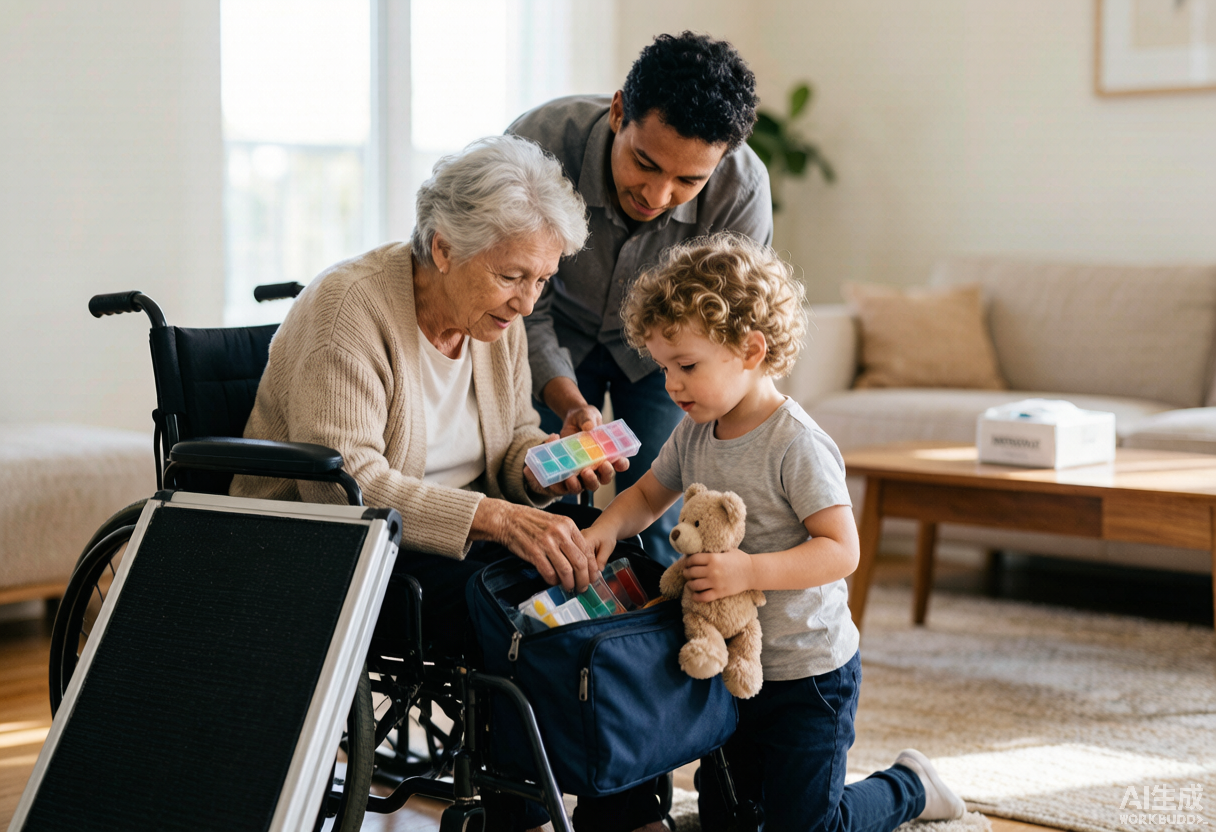
Beyond the household go-bag, each person who relies on daily support needs a personal kit with the specific items they cannot be without. Pack it in a labeled bag that the person themselves can carry or wheel.
- A 7-day supply of every medication, plus a written list with dosages and the pharmacy phone number.
- Spare batteries, chargers, and a portable backup battery for hearing aids, CPAP, and other devices.
- Copies of insurance cards, medical records, and a doctor's name and phone number.
- Comfort items for children: a favorite toy, blanket, books, and quiet activities.
- A written note describing mobility, communication, and any behavioral needs for first responders.
Plan for Medications and Medical Equipment
Power loss and pharmacy closures are the two biggest threats to people who depend on regular medical care. Plan for both before the storm reaches your area.
- Fill every prescription at least a week early; ask for a 30-day supply when possible.
- Store medications in a waterproof, labeled container you can grab quickly.
- For insulin and other temperature-sensitive drugs, pack a cooler with a thermometer.
- Get a backup power source for CPAP, ventilators, or oxygen concentrators and test it.
- Call the power company and register as a medical-needs household for priority restoration.
- Ask about oxygen delivery, dialysis, or home-care services in your county's emergency plan.
Evacuation With Seniors and People With Mobility Needs
Evacuation takes longer for households with mobility limitations, and standard plans assume everyone can walk to a bus or car quickly. Design the route and the schedule around the slowest member.
- Leave one to two days earlier than the general evacuation order if possible.
- Pre-arrange a ride from a neighbor, family member, or local disability or aging organization.
- Bring mobility aids, spare batteries for power wheelchairs, and a charger for the car.
- If you cannot drive, register in advance with your county's emergency management office.
- Identify which shelters are accessible; check before the storm, not during it.
Special Plans for Children
Children process warnings differently from adults, and their needs change the plan—car seats, strollers, food, and emotional support all have to fit in the car.
- Install and double-check car seats well before the evacuation order.
- Pack diapers, wipes, formula or preferred foods, and a change of clothes for each child.
- Include age-appropriate activities and one comfort item to reduce stress.
- Explain the plan in simple, calm words; practice the go-bag and the evacuation drill.
- Know where schools and childcare providers send children if the storm hits during the day.
Communication and Cognitive Needs
People who are deaf, hard of hearing, blind, or living with dementia or autism need information in a form they can actually receive. Adapt alerts and instructions to each person.
- Use a NOAA Weather Radio with a visual alert or a smartphone with vibration alerts for deaf and hard-of-hearing members.
- Provide written, large-print instructions for people with cognitive or vision needs.
- Practice the plan in a low-stress setting; repeat steps calmly and often for people with dementia.
- For a person who wanders, pack identification and contact information inside their clothing.
- Keep a contact list of neighbors who know the person's needs and can help in an emergency.
Sheltering and the Shelter Experience
General population shelters are loud, crowded, and often short on medical support. Know what your household needs before you choose to go to one.
- Ask about medical shelters or shelter-at-home programs before the storm arrives.
- Bring bedding, food for special diets, and all medical equipment and supplies.
- Request a quiet or accessible area if available; shelter managers can usually help.
- Pack cash, because card readers and ATMs often fail after a storm.
- For service animals, carry documentation and the animal's own kit and water.
After the Storm: Follow-Up Needs
Vulnerability continues after the storm passes. Medication refills, medical appointments, and mobility barriers all persist into the recovery period.
- Refill prescriptions as soon as pharmacies reopen; do not wait until supplies run out.
- Keep medical devices charged from your car or generator if the home is still without power.
- Ask for help clearing a path for wheelchairs and walkers around damaged homes.
- Check on neighbors who are older or have disabilities—storms isolate people fast.
- Reach out to your local aging or disability agency if home care or transportation was disrupted.
Stay Informed With HurricaneHub
The best hurricane plan starts with reliable information. HurricaneHub brings together the NHC forecast cone, GOES-East satellite, RainViewer Doppler radar, NWS active alerts, storm surge zones, and evacuation overlays on a single interactive map. Check current warnings for your neighborhood, see which areas are under evacuation orders, and plan your family's move with confidence at hurricanetracker.cc.
Official Source Check
Before making a life-safety decision, check weather.gov, your local emergency management agency, and current NHC advisories. NOAA/NESDIS and NASA images in this article are public-domain source visuals.
Next Actions After Reading
Use the article for background, then move to the tracker, alert, city, or planning page that matches your current situation.
Turn the article into a supplies, documents, pets, and household readiness checklist.
Translate watch, warning, surge, flood, tornado, and evacuation wording into household actions.
Check current NHC storm context, live map shortcuts, radar, and active alert pathways.
Move from general guidance to local storm surge, flooding, route, outage, and alert context.