Step 1
Check the Current Wind
Use the latest NHC advisory for maximum sustained wind, category, pressure, movement, and update time.
Saffir-Simpson scale
Hurricane categories rank maximum sustained wind from Category 1 through Category 5. The Saffir-Simpson scale helps communicate wind damage potential, but it does not measure storm surge, rainfall flooding, tornadoes, storm size, or duration.
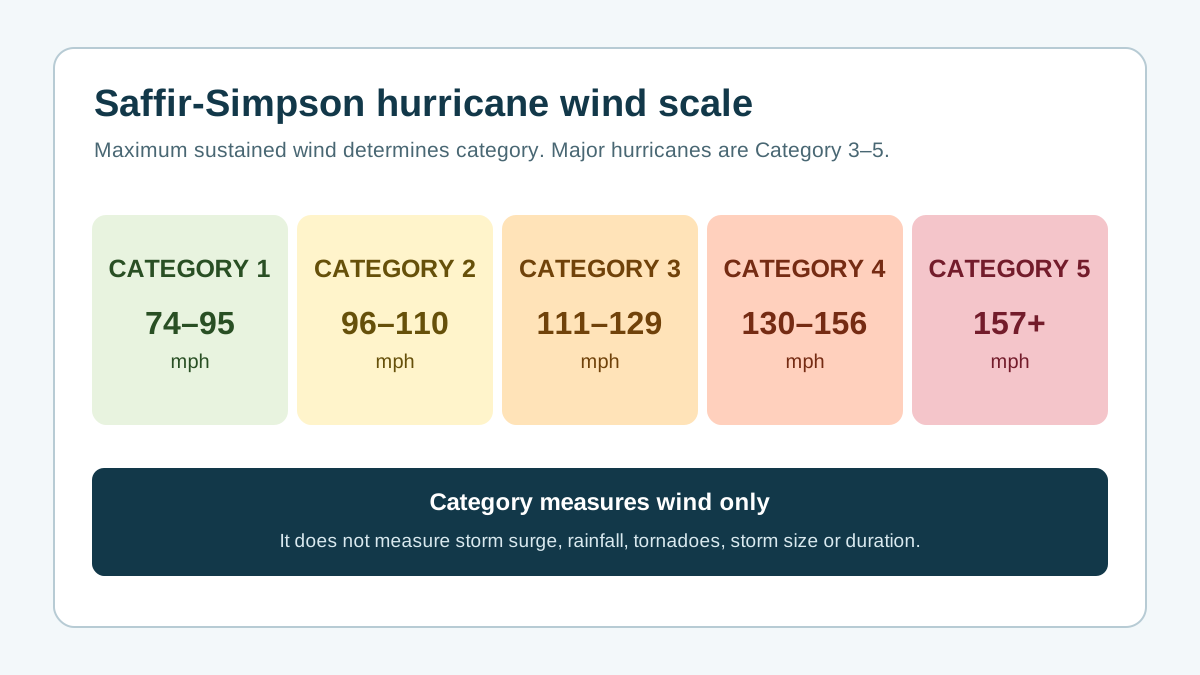
hurricane categories, Category 1 through 5 wind speed, hurricane category scale
Step 1
Use the latest NHC advisory for maximum sustained wind, category, pressure, movement, and update time.
Step 2
Read surge, rainfall, flood, tornado, and local wind products because the category measures wind only.
Step 3
Housing, trees, utilities, flood zones, bridges, and evacuation constraints determine how the same storm affects different places.
Category thresholds
The scale uses one-minute maximum sustained wind. Major hurricanes are Category 3, 4, or 5, but all hurricanes can produce dangerous conditions.
Scale limits
A lower-category storm can be catastrophic when it is large, slow, rain-heavy, or pushing water into a vulnerable coastline.
Related hurricane resources
Compare the broader cyclone classifications and thresholds.
Check the latest official strength for active systems.
Review the water hazard that category does not measure.
Connect storm hazards to a city, state, ZIP, or household plan.
Official-source check
HurricaneHub is a planning and interpretation layer. During an active threat, confirm storm advisories, watches, warnings, evacuation orders, shelters, and road restrictions with official sources.
Local planning
After reading this hub, the most useful next page is usually a city tracker, state tracker, alert page, or household tool that matches the place you care about.
Category 1 is 74-95 mph, Category 2 is 96-110 mph, Category 3 is 111-129 mph, Category 4 is 130-156 mph, and Category 5 is 157 mph or higher.
A major hurricane is Category 3, 4, or 5, with maximum sustained winds of at least 111 mph.
No. The category measures maximum sustained wind only. Surge depends on storm size, track, coastline shape, depth, speed, and tides.
Yes. Category 1 hurricanes can cause damaging wind, surge, rainfall flooding, tornadoes, waves, outages, and dangerous travel conditions.
Check your official local warning first, compare it with the current NHC storm position, then decide whether your home, route, or medical needs require earlier action than the county deadline.
NHC advisories usually update on a cycle set by the storm situation, while NWS alerts can change at any time. HurricaneHub caches public feeds for short windows to reduce latency without hiding official updates.
No. HurricaneHub summarizes official data for decision support, but evacuation orders, shelter rules, road closures, and rescue instructions come from local emergency management and the National Weather Service.