Choose the Safe Work Window First
Before moving anything, read the current local instructions and identify who needs transport, medication or help leaving. Property work belongs inside the time and conditions those needs allow. A storm's center position or forecast landfall time does not establish how long your yard, driveway or route remains safe. If officials require immediate evacuation or shelter, follow that instruction instead of starting this list. The purpose here is to deploy what is already available safely, not to complete a renovation under pressure.
Start Outside
Use this guide for the near-term decision about securing the property or leaving. Structural retrofit projects belong in the separate home-hardening guide, and the room-by-room checklist covers an interior inventory. Walk the property in calm weather and list loose furniture, bins, toys, and tools that can be moved without climbing. Clear accessible drainage only when safe, and arrange qualified help for roof, electrical, or large-tree work rather than beginning those jobs as a storm approaches.
Separate Ready Protection From an Unfinished Project
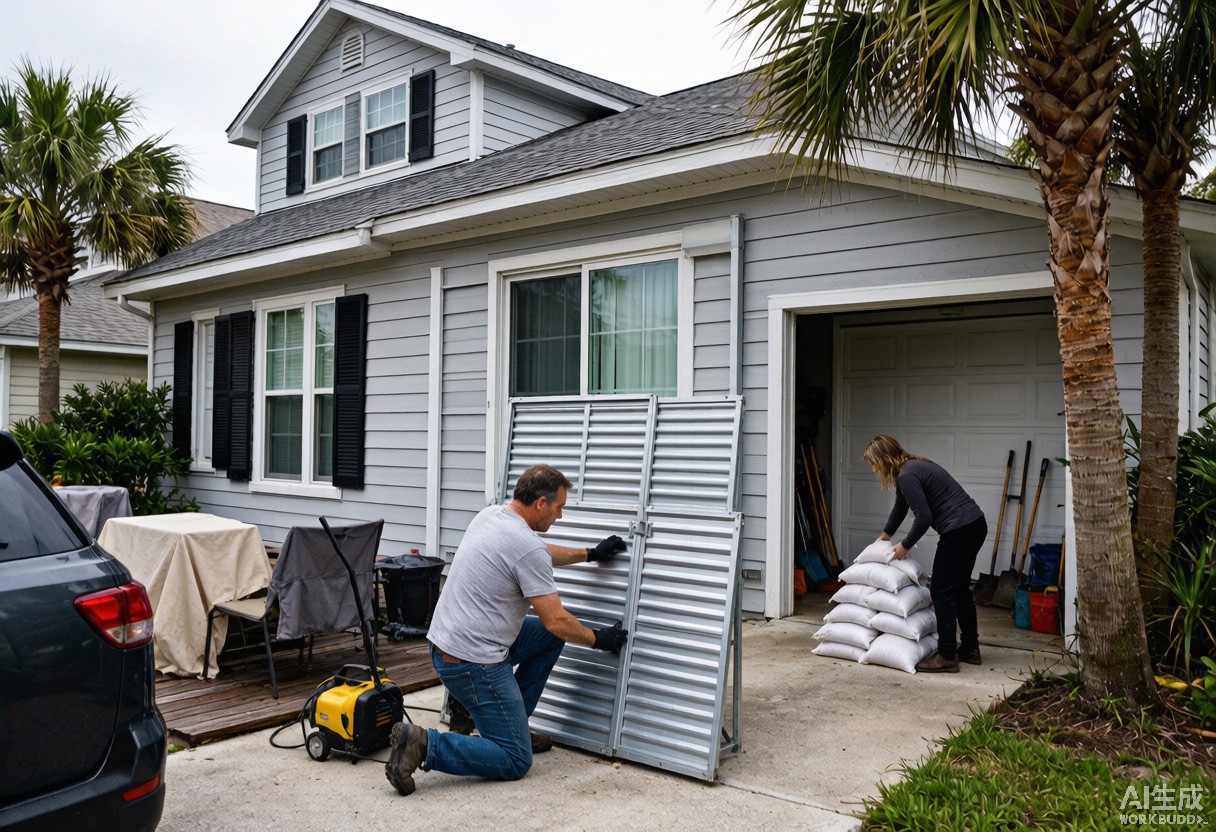
Check that the existing shutter or panel system has its correct labeled parts, fasteners and installation instructions before the safe window narrows. A panel in the garage is not a protected opening until the appropriate installation is completed. If parts are missing, the system is unfamiliar or the work needs a ladder or professional help, mark that task unresolved and seek qualified advice early. Do not improvise fastening, substitute tape for rated protection or assume a purchase receipt proves installation.
- Ready: the correct protection, instructions, hardware and capable help are available, and conditions permit installation.
- Unresolved: a missing part, uncertain attachment or unavailable installer prevents completion. Do not label the opening protected.
- Deferred project: roof replacement, structural connections and major upgrades belong in calm-weather planning with qualified professionals.
- Departure: incomplete protection does not override an evacuation instruction or make late outdoor work safe.
Protect Records and Utilities
Prepare for power, water, and communication disruption.
- Keep essential documents portable and protected from water; do not seal them behind stored furniture.
- Move vehicles away from trees and flood-prone streets only while conditions permit, keeping the departure route usable.
- Keep utility contacts and instructions available. Follow the utility or local officials; do not practice gas or electrical work from a general checklist.
- Charge approved backup batteries and medical devices; obtain device-specific outage instructions from the provider.
Inside the Home
Move portable valuables away from windows and low areas only while it is safe, without blocking doors, stairs or access to essential equipment. Keep shoes, flashlights and a battery radio within reach in darkness. Do not turn a sheltered room into a storage area that people or pets cannot enter. Handling belongings should not delay an ordered departure.
Plan Florida Wind Mitigation Before a Storm
Schedule structural improvements and inspection paperwork while conditions are calm. Florida homeowners considering a wind mitigation inspection should ask their insurer which credits are already applied, the annual wind premium before any proposed additional credit, and the additional discount the insurer can confirm. Use those figures to compare annual savings and inspection payback. A savings scenario does not establish eligibility, guarantee a lower renewal bill, or cover the cost of roof or shutter improvements. Home improvements also do not replace local evacuation instructions.
Assign the Work Before the Departure Deadline
Write a short job list with an owner, required equipment, and stop time. For example: one adult brings patio furniture indoors; another packs medicines and records while confirming the destination. If shutters require a contractor or missing fasteners, solve that ahead of season. Tape on glass is not an alternative to rated protection. Keep the exit route clear and do not leave a ladder, extension cord, or heavy panel blocking the door.
- Confirm which openings already have approved protection and where the hardware is stored.
- Ask a landlord or association which exterior work residents may perform.
- Keep vehicle keys, shoes, and go-bags accessible after furniture is moved.
- If an evacuation order leaves no safe work window, leave rather than finishing property tasks.
Keep an Unfinished-Task Handoff Instead of a False All-Done Check
Copy this short record during calm-weather preparation. Give each task one responsible person and a visible status: completed and checked, awaiting help, or deferred. A booked appointment or a box of parts does not mean protection is installed. At departure, the useful record tells the household what is still incomplete without sending someone back to finish it.
| Task | Completion check | If it cannot be completed safely |
|---|---|---|
| Move loose outdoor objects | Items are secured and do not obstruct doors, stairs or the vehicle path | Stop outdoor work when unsafe; do not sacrifice the departure window for remaining objects |
| Deploy existing opening protection | Correct system and hardware installed according to its instructions by capable help | Record the opening as unresolved; seek qualified help early rather than improvising |
| Charge and pack essential devices | Needed devices and appropriate chargers remain accessible for travel | Resolve equipment-specific needs with the provider; a charging icon does not establish backup runtime |
| Pack records and medicines | Responsible carrier can reach the portable folder and required supplies | Tell the departing household about missing items; do not return to danger for property or paperwork |
Add names and local instruction references privately. This record cannot establish that a building is safe to shelter in or extend an official departure deadline.
Walk the Exit After Moving the Furniture
Before checking the property task complete, walk the actual path from the living area to the departure vehicle or designated shelter space while conditions are still safe. Check it with the household's mobility equipment and pet carriers in mind. Furniture, a heavy shutter panel or a charging cable can create a new obstruction even when the yard looks tidier. Keep keys, medicines, shoes and portable records reachable without moving the stored items again. This is a usability check, not an inspection that certifies the structure or a route as storm-safe.
When to Stop Preparing
Stop when conditions become unsafe or current instructions require shelter or departure. Do not wait for a watch to become a warning before recognizing lightning, rising water, unstable footing or wind-blown objects. Conversely, the warning label alone does not tell every household the same remaining work time. Current instructions, actual conditions and the household's departure needs control. Leave an optional task unfinished rather than using the last safe travel window to protect property.
Readiness Check: Does the Home Task Delay the People Task?
Illustrative check, not a report from a real household: patio chairs have been moved indoors, but now block the door needed for a wheelchair. One window panel still lacks hardware and a driver is ready to depart under local instructions. The useful next step is to restore the exit and follow the departure instruction, not to search a hardware store to finish the panel. Record the incomplete protection honestly. A tidy yard, installed shutters and a charged phone are separate tasks; none proves the home is suitable for staying through surge, flooding or severe wind.
References
- Ready.gov: hurricane preparation and protective actions
- IBHS: prepare an existing home before an event
References provide background; they are not an endorsement of HurricaneHub. Current warnings and local evacuation orders take priority over this article.
Next Actions After Reading
Build your household checklist
Check supplies, documents and household needs before a storm threatens.
Review roof, door and window protection
Separate building improvements that need qualified assessment from last-minute preparation.